Why hearing loss is about more than missing conversations
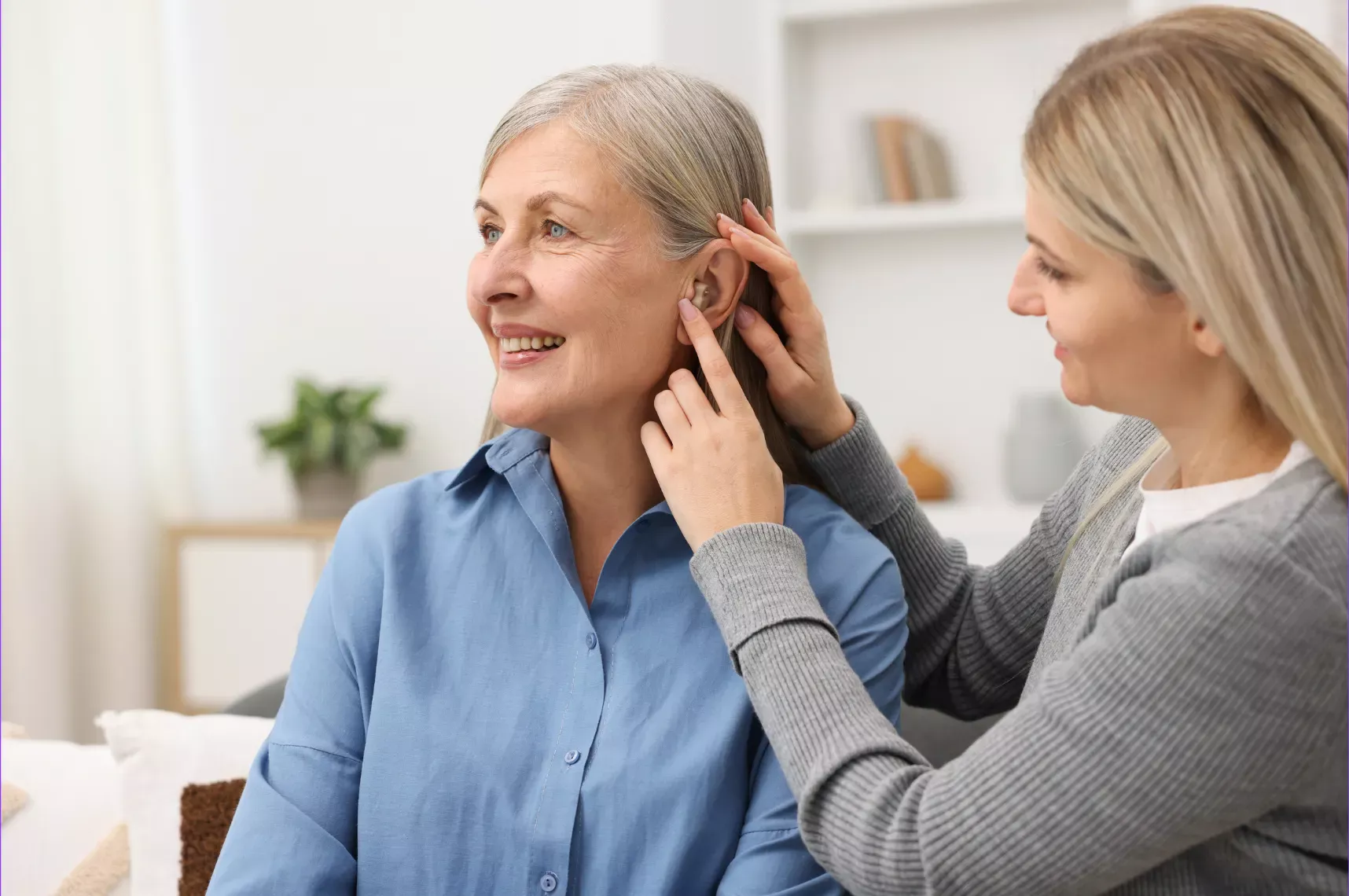
“I didn’t know wind made a sound!” said my friend, David, when he first went outside after being fitted for hearing aids. He was also taken aback when he heard birds singing.
His hearing loss had become severe over the previous few years, but he didn’t realize just how much he’d been missing until everyday sounds suddenly returned. David’s hearing had slowly disappeared from his life without him fully noticing. He knew his hearing was bad, but being able to hear (almost) normally was a huge awakening.
His audiologist gradually increased the volume over several visits. After years of missing so many sounds, she explained, his brain needed time to relearn how to process them — and he might never be comfortable hearing everything at full volume.
At 63, he was younger than the average first-time hearing-aid user of 70–74. But a genetic predisposition, tinnitus, and years of swimming had all played a role in his hearing loss.
And, since insurance didn’t cover them, he paid the $4,000 out of pocket.
Not only does he hear better, but he may also have reduced his risk of cognitive decline.
“Everyone mumbles!”
I talk to someone my age at my gym (67) who’s clearly hard of hearing. He often either ignores my question or nods as if he heard me when I know he didn’t. I have to stand directly in front of him when I talk, or I know he won’t hear me.
This happened to me in the past with another friend, a woman a few years older than me. But instead of asking me to speak up, she’d get angry and tell me to “stop mumbling”- when I knew I wasn’t.
This textbook mumbling accusation is common among people who deny hearing loss and blame it on external factors. This denial may be due to anxiety about aging or worries about social perceptions of wearing hearing aids. Reading glasses can also signal aging, but hearing aids are more tied to decline and frailty in many people’s minds.
These feelings may be natural, but they can also make it easier to ignore the problem.
This perception of everyone mumbling may be because the brain constructs what it “hears.” Like talking on the phone with a bad connection, the brain is piecing together a coherent auditory experience from incomplete data. So everyone around them seems to be mumbling or incoherent.
Hearing loss red flags
Many people wait for up to 10 years between first noticing a problem and getting help. Early intervention is crucial to address the issue before it affects your brain, however.
Here are early warning signs to look for in yourself or others:
- Consonant confusion: difficulty differentiating th-, sh-, p-, t-, s-, and f- sounds is an early red flag.
- High-pitched sounds become harder to hear — women’s and children’s voices can be more difficult to follow, especially in restaurant situations. You may need to see the person’s face when they’re talking — like the friend I mentioned.
- Ambient sounds disappear. Birds chirping, the whistle of a tea kettle, or the clicking of a turn signal become imperceptible.
- Feeling exhausted after conversations is another symptom. The brain has to work much harder to interpret the auditory information coming in.
Often, the person with hearing loss doesn’t believe they have a problem. And part of the reason is often that those around them are speaking louder, repeating things, or otherwise managing communication for them. I find myself talking louder to my friend because I know she isn’t hearing me at my regular volume.
David, the friend I mentioned earlier, has everything against him in the hearing department: heredity, which accounts for about 35–55% of hearing loss as we age, tinnitus — which is often a symptom of underlying auditory damage — and swimming. Commonly called “surfer’s ear,” swimmers and surfers are disproportionately affected.
The brain-hearing connection
Correcting hearing loss goes beyond simply being able to hear people talking to you. It could save your brain.
The connection between hearing loss and cognitive decline is clear. A 2024 meta-analysis combining data from 50 studies and over 1.5 million participants concluded that adult-onset hearing loss increases the risk for cognitive decline, dementia, and Alzheimer’s disease.
While hearing loss doesn’t necessarily cause dementia in every case, there’s a strong enough connection for researchers to take it seriously — especially when you consider that hearing loss affects 27% of adults in the U.S. 65 years and older, and approximately 65% of those aged 71 and older.
Several mechanisms may explain the brain-hearing connection, and they compound each other.
Consider that your ears collect sound, but it’s your brain that listens. So when part of the sound is missing, the auditory center can’t understand what’s going on and recruits help from your cognitive center’s nearby frontal lobe.
But since your frontal lobe is designed for higher cognitive functions like memory, problem solving, decision making, and personality, every strained conversation “borrows” from your cognitive reserves.
In addition, the part of your brain dedicated to processing sound — the auditory cortex — needs a steady stream of input to stay healthy. When hearing loss reduces that input, the auditory cortex shrinks the same way a muscle atrophies when it’s no longer used (this shows up on scans).
That’s only part of the story.
Your gray matter now has to work much harder just to follow a conversation. Again, like talking on the phone with a bad connection, the sound arrives incomplete and degraded. So your brain has to fill in the gaps — recruiting regions that are supposed to be handling more executive function.
This cognitive effort eventually depletes resources that should be going elsewhere.
After a while, conversations become exhausting. So someone with hearing loss often withdraws from social events. Avoiding parties and group gatherings creates too much friction and can lead to social isolation. This pulling away accelerates cognitive decline in a completely separate way.
The good news: hearing aids can help prevent this cognitive decline. Adoption within three years of diagnosis was associated with significantly better cognitive protection than delaying treatment, according to a French study of over 2,000 participants.
Now hear this
Hearing loss doesn’t usually happen overnight. Its gradual progression means you may not notice changes before your friends and family do. Don’t wait for a crisis moment. Do you find yourself watching people’s mouths when they talk? Do you follow conversations in restaurants, or do you have to fake it?
Ask someone close to you if they feel as if you’re not hearing them. Many people do what I do with my gym friend: they stand in front of the person with hearing loss and speak louder. This only keeps the person in denial.
Notice if you can’t make out the words someone’s saying to you — especially in background noise, where women’s and children’s voices are hard to hear.
Simply self-care
Most importantly, get a baseline audiogram from an audiologist after 50, even if you think your hearing is fine. You can’t track decline without a baseline.
A hearing test isn’t a hearing aid sentence. It’s simply information. Like checking your blood pressure or getting your vision checked, it’s part of taking care of yourself as you age. And if you have to get hearing aids, own it. The new ones are super tiny and discreet. No one will be the wiser.
You’ll not only be able to hear the wind, the birds, and your friend talking to you at a party, but you’ll be protecting your cognitive centers at the same time.
About the Author